
Return on imagination - A hackathon retrospective e-book
ROLE
Content designer
COLLABORATORS
Julian Fernando (Graphic designer)
Femina Somnath (Editor)
BRIEF
Hackathon needed a story and a voice
A hospitality-tech client partnered with a leading US-based university's hospitality school to host a design ideathon. My job was to shape that event into a compelling e-book that could live beyond the room where it happened.
WHAT I DID
Writing + building the narrative
I came on as writer and conceptualizer, responsible for the structure, tone, and storytelling framework of the entire piece, beyond just the copy.
CONCEPT
Return on imagination
I built the e-book around a deliberate reframe of ROI, shifting the conversation from return on investment to return on imagination. I did this to give the piece a cohesive identity and a central idea readers could take with them.

WORK
Four ideas, one cohesive story
The e-book translated four student-pitched innovations that covered sustainability, metaverse experiences, check-in tech, and AI housekeeping into engaging narratives that balanced creative excitement with industry credibility.
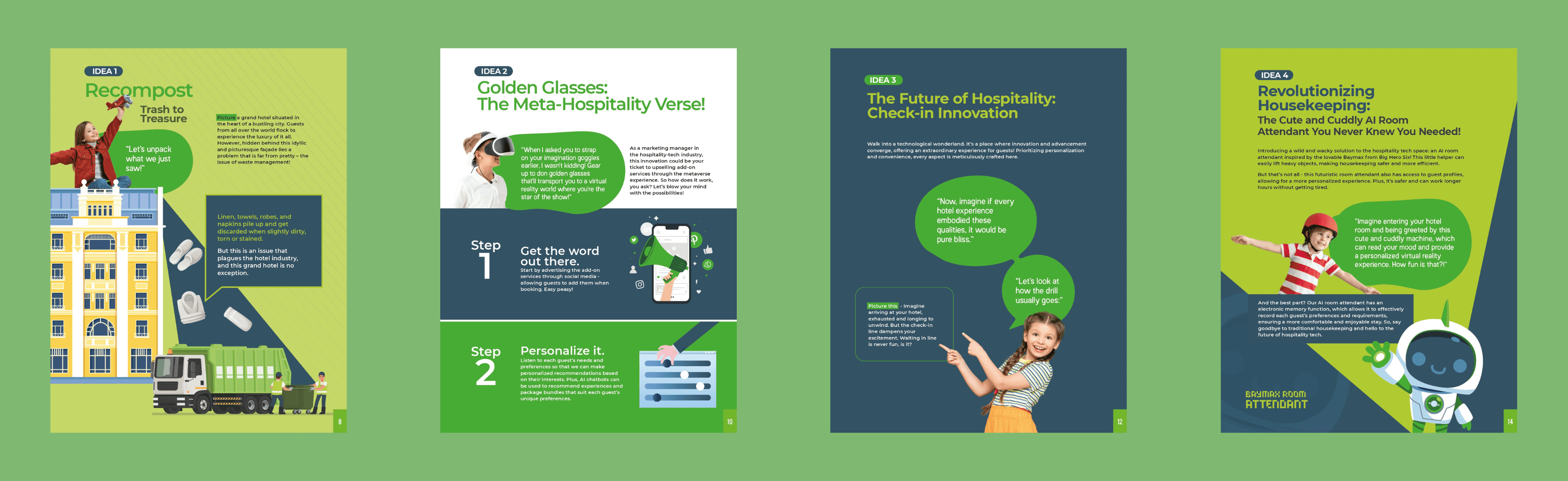
Design note: The visual language is intentional and rooted in the client's brand guidelines, which positioned them around futuristic hospitality-tech.
OUTCOME
The final asset positioned the client as more than a tech vendor, but as an organization that invested in imagination and wonder, helping to fuel the next generation of ideas about where hospitality can, and will evolve.

❋ All identifiable names have been omitted for confidentiality. If you'd like to know more about my process or any further details, reach out to me ↗
TAKEAWAYS
Represent, don't rewrite
My north star throughout was the students who came up with these ideas. My job was to represent them as clearly and compellingly as possible.
Constraints aren't always limiting
Within the brand guidelines we were given, we still found room to experiment. We presented several versions to the client, and they chose the most experimental one. This experience taught me to always put a range on the table early. You never know what'll click.